
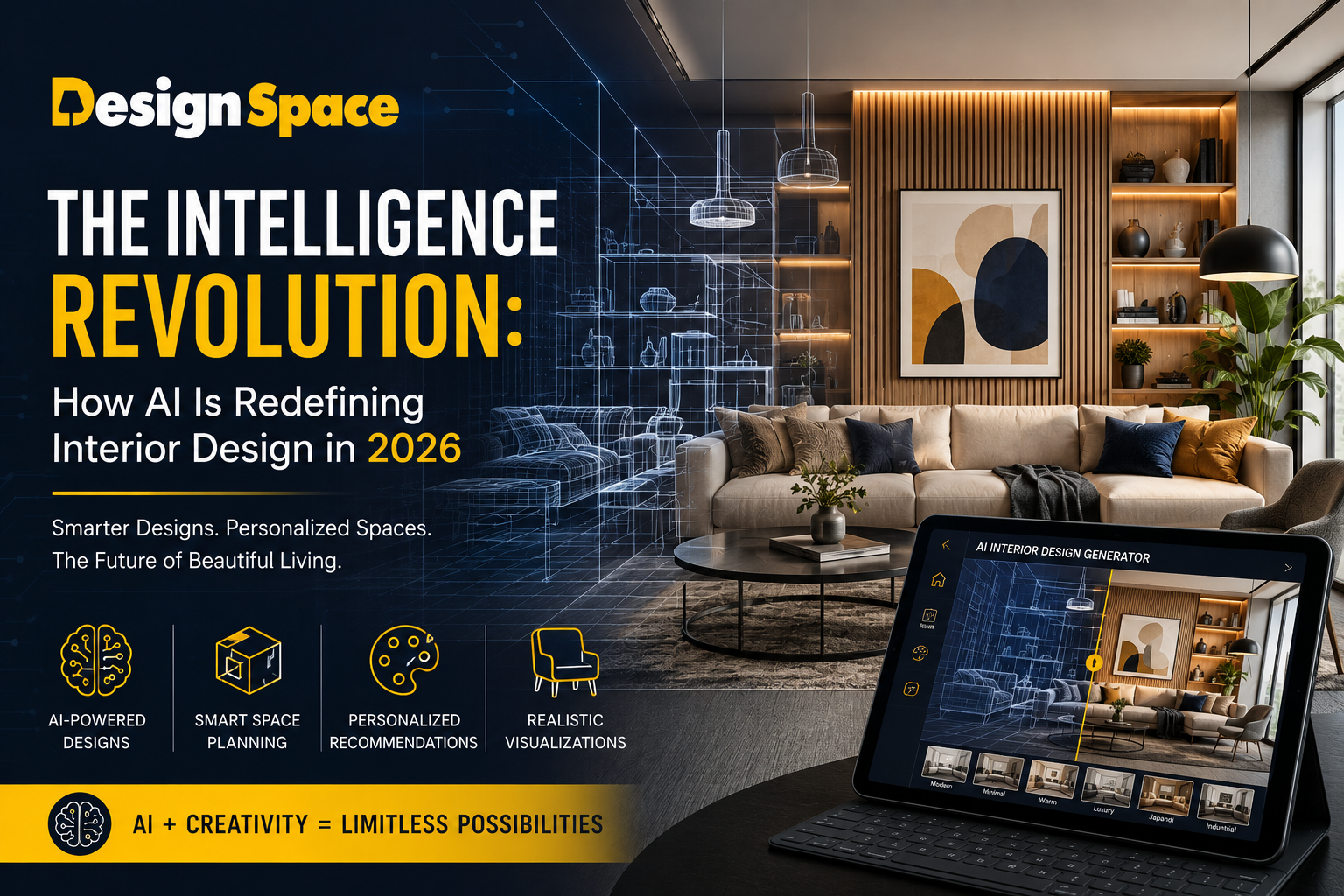
The Intelligence Revolution: How AI Is Redefining Interior Design in 2026
Interior design is experiencing a remarkable transformation in 2026. Artificial Intelligence (AI) is no longer a futuristic concept—it’s actively reshaping how homes, offices, and commercial spaces are designed. From generating realistic room visualizations to optimizing layouts and recommending furniture, AI is helping designers and homeowners create beautiful spaces faster and more efficiently than ever before. AI-powered tools are accelerating concept development, improving client collaboration, and making professional-quality design more accessible.
This revolution isn’t about replacing interior designers; it’s about enhancing creativity, streamlining workflows, and delivering personalized design experiences.
What Is AI-Powered Interior Design?
AI-powered interior design uses machine learning, computer vision, and generative AI technologies to analyze spaces, understand user preferences, and generate design recommendations.
Modern AI tools can:
- Create realistic room visualizations within seconds
- Suggest furniture arrangements
- Recommend color palettes
- Generate multiple design concepts
- Optimize space utilization
- Assist with lighting planning
- Produce virtual staging for real estate properties
These capabilities allow homeowners and designers to explore countless possibilities before making costly decisions.
Key Ways AI Is Transforming Interior Design
1. Faster Concept Development
Traditional concept creation could take days or weeks. AI now generates multiple room concepts in minutes, enabling designers to explore more ideas and present diverse options to clients. This significantly reduces project timelines while maintaining creativity.
2. Personalized Design Experiences
AI analyzes user preferences, lifestyle needs, and design inspirations to create highly customized recommendations. Instead of generic designs, homeowners receive solutions tailored specifically to their tastes and functional requirements.
3. Enhanced Visualization
One of the biggest challenges in interior design has always been helping clients visualize the final outcome. AI-generated renderings and virtual walkthroughs provide photorealistic previews, reducing uncertainty and improving decision-making.
4. Smart Space Planning
AI can evaluate room dimensions, traffic flow, and furniture placement to create layouts that maximize functionality and comfort. This is particularly valuable for compact urban homes where every square foot matters.
5. Budget Optimization
Advanced AI systems can suggest alternative materials, furnishings, and layouts that align with a homeowner’s budget while maintaining aesthetic quality. This helps achieve premium results without overspending.
Top Interior Design Trends Influenced by AI in 2026
Warm Minimalism
Clean lines remain popular, but designers are incorporating warmer colors, natural materials, and cozy textures to create more inviting environments. AI tools frequently recommend these combinations based on current design preferences.
Nature-Inspired Design
Earthy tones, natural stone, wood textures, and biophilic elements continue to dominate interior spaces. AI recognizes these trends and integrates them into design recommendations.
Personalized Spaces
Homeowners increasingly seek interiors that reflect their personalities rather than following generic trends. AI enables deeper personalization through preference-based design generation.
Smart Home Integration
Technology is becoming seamlessly integrated into interior design. AI assists in planning layouts that accommodate smart lighting, climate control, and connected devices without compromising aesthetics.
Benefits of AI for Interior Designers
Increased Productivity
AI automates repetitive tasks, allowing designers to focus on strategy, creativity, and client relationships.
Better Client Communication
Visual AI-generated presentations help clients understand design concepts quickly and provide meaningful feedback.
More Creative Exploration
Designers can test numerous styles, layouts, and color combinations without extensive manual effort.
Competitive Advantage
Professionals who embrace AI can deliver projects faster, improve customer satisfaction, and stay ahead in an evolving industry.
The Human Touch Still Matters
Despite rapid advancements, AI cannot replace human creativity, empathy, and experience. Successful interior design requires understanding emotions, lifestyles, cultural influences, and personal stories—qualities that remain uniquely human.
AI works best as a collaborative partner rather than a replacement. The most successful projects combine technological efficiency with human insight. Industry experts consistently emphasize that great design is ultimately about creating meaningful experiences, not just visually appealing spaces.
Challenges and Considerations
While AI offers significant advantages, there are some limitations:
- AI-generated concepts may lack emotional depth.
- Overreliance on trends can create repetitive designs.
- Privacy concerns may arise when uploading room images.
- Human review is essential to ensure practicality and accuracy.
Designers should use AI thoughtfully while maintaining creative control and professional judgment.
The Future of AI in Interior Design
Looking ahead, AI will become even more integrated into design workflows. Emerging technologies are expected to offer:
- Real-time design adjustments
- Augmented reality room visualization
- Predictive design recommendations
- Advanced sustainability analysis
- Voice-controlled design assistants
As these innovations mature, homeowners and designers will gain unprecedented control over creating personalized, efficient, and beautiful spaces.
Conclusion
AI is revolutionizing the interior design industry in 2026 by making design more accessible, efficient, and personalized. From instant visualizations and intelligent space planning to customized recommendations and faster project delivery, AI is transforming how spaces are imagined and created.
However, technology alone cannot replace human creativity and emotional intelligence. The future belongs to designers who embrace AI as a powerful tool while continuing to deliver the unique human perspective that turns houses into homes. By combining innovation with artistry, the next generation of interior design will be smarter, more personalized, and more inspiring than ever before.
Frequently Asked Questions (FAQs)
1. What is AI interior design?
AI interior design uses artificial intelligence to generate layouts, color schemes, furniture arrangements, and room visualizations based on user preferences and space dimensions.
2. Can AI replace interior designers?
No. AI enhances efficiency and creativity but cannot replace human expertise, emotional understanding, and personalized decision-making.
3. How does AI help homeowners?
AI helps homeowners visualize design ideas, compare styles, optimize layouts, and make informed purchasing decisions before investing in renovations.
4. Is AI interior design expensive?
Many AI design tools offer more affordable solutions than traditional design services, making professional-quality design more accessible.
5. What are the biggest AI-driven design trends in 2026?
Warm minimalism, nature-inspired interiors, personalized spaces, smart home integration, and AI-assisted visualization are among the leading trends.
