
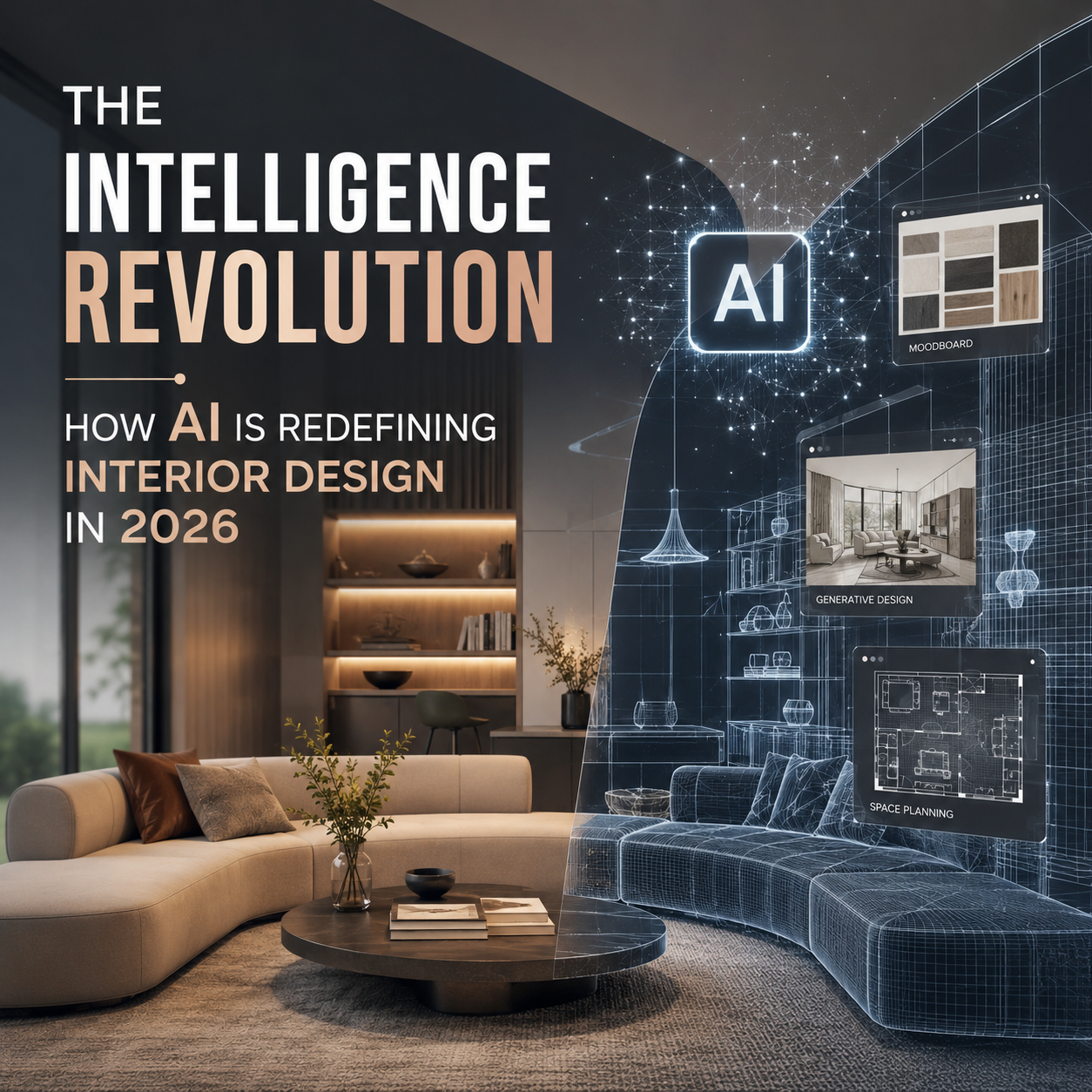
The Intelligence Revolution: How AI is Redefining Interior Design in 2026
Artificial intelligence has officially moved past the “hype” phase. In 2026, it is no longer just a futuristic concept—it is the primary engine driving a paradigm shift in the interior design industry. From residential sanctuaries to commercial hubs, AI is making the design process faster, smarter, and deeply personal.
1. Precision Space Planning
Gone are the hours spent manually calculating spatial ratios and light distribution. Modern AI tools analyze room dimensions and environmental factors to suggest optimal layouts instantly. By leveraging platforms like Planner 5D and Homestyler, designers can now generate high-precision floor plans that maximize every square inch.
2. Hyper-Personalization at Scale
AI doesn’t just “guess” style; it analyzes lifestyle patterns. By processing user behavior and aesthetic preferences, AI can curate interiors that act as a true reflection of the inhabitant. Whether it’s a high-functioning minimalist studio or a biophilic luxury suite, the result is a space tailored to the individual’s psychological and physical needs.
3. Real-Time Visualization & Digital Twins
The gap between “vision” and “reality” has vanished. With tools like SketchUp and RoomGPT, we have moved into the era of the Instant Preview.
- Real-time rendering: Change wall colors or furniture textures in a millisecond.
- Immersive 3D: Clients can “walk” through their space before a single piece of furniture is ordered.
4. Data-Driven Sourcing and Sustainability
AI has turned procurement into a strategic advantage. By cross-referencing budgets, room scale, and current supply chain trends, AI recommends decor that is both practical and cost-efficient. More importantly, AI is the new frontier of green design, suggesting eco-friendly materials and energy-efficient layouts that maximize natural light and reduce carbon footprints.
5. From Intuition-Driven to Intelligence-Powered
The most significant shift in 2026 isn’t just the tools—it’s the workflow. AI reduces the “guesswork” and endless revision cycles, allowing for faster, data-backed decision-making. This efficiency allows projects to move from concept to execution in a fraction of the traditional timeline.
🚀 The Verdict: Collaboration over Replacement
A common misconception is that AI will replace the designer. On the contrary, AI is empowering the designer. By automating the repetitive, technical tasks, it frees the human mind to focus on what it does best: creativity, empathy, and innovation.
The future of our industry lies in this synergy:
Human Creativity + AI Intelligence = Exceptional Living Experiences
Final Thoughts
In 2026, embracing AI isn’t just an option—it’s a prerequisite for staying relevant in a rapidly evolving market. Whether you are a professional or a homeowner, we are all stepping into a new era of smarter, more intentional living.
